The Greatest Women in History: Grace Hopper, The Mother of Computer Programming
When we speak of programming and computers, we always hear about men as the greatest minds behind it all, but history tells us a bit different story. One of the most revolutionary figures in computing was a woman: Grace Hopper, often called the “Mother of Modern Programming.”
Her story challenges the narrative and shows how one brilliant, persistent woman helped lay the foundations for the digital world we live in today.
Long before smartphones, apps, or the internet existed, Grace Hopper was the women who created the very language computers use today! Her groundbreaking work made programming more accessible and ultimately helped build the technological world modern families rely on every day.
A Brilliant Mind from the Beginning
Grace Brewster Murray Hopper was born on December 9, 1906, in New York City. From an early age, she showed a deep curiosity about how things worked. Family stories say that as a child, around age 7, she once dismantled seven family alarm clocks just to understand their mechanisms, scattering gears and parts everywhere before her mother limited her to one clock at a time. This relentless curiosity defined her lifelong drive to innovate.
Her passion for mathematics led her to graduate Phi Beta Kappa from Vassar College in 1928 with degrees in mathematics and physics, earn a master’s degree from Yale University in 1930, and complete a PhD in mathematics from Yale in 1934, a remarkable achievement for a woman at a time when few women were encouraged to pursue advanced scientific careers.
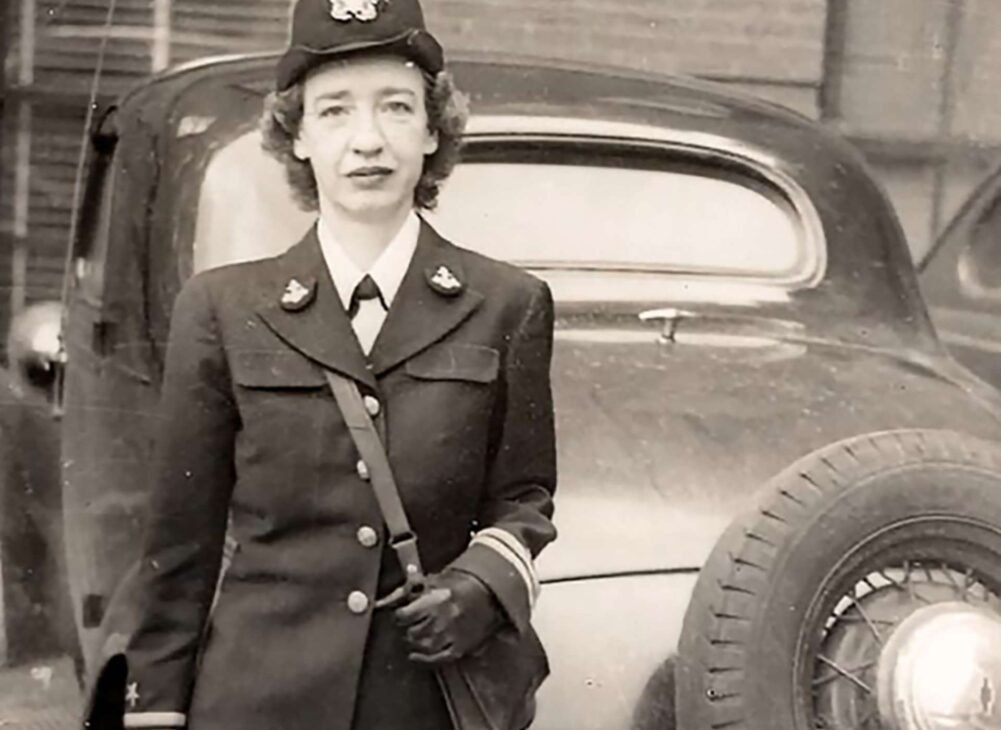
Admiral Grace Murray Hopper
Personal Life and Resilience
In 1930, Grace Hopper married Vincent Foster Hopper, a professor at New York University. The couple had no children, and they divorced in 1945. She never remarried, instead channeling her extraordinary energy into her career, teaching, and later her pioneering work in computing and the Navy.
Grace Hopper: A Pioneer in the U.S. Navy
During World War II, Grace Hopper joined the United States Navy Reserve and was assigned to work on one of the earliest computers, the Harvard Mark I, at Harvard University. These early machines were enormous and extremely complex, programmed with long strings of numerical instructions. Programming them required deep technical expertise and patience.
Hopper believed computers should be easier for humans to communicate with. Initially rejected from the Navy at age 34 for being “too old” (and needing a waiver because her weight of about 105 pounds was below the minimum), she persevered, joined the Naval Reserve, graduated first in her class at midshipman’s school, and served for over 40 years. She earned the affectionate nickname “Amazing Grace” from her team.
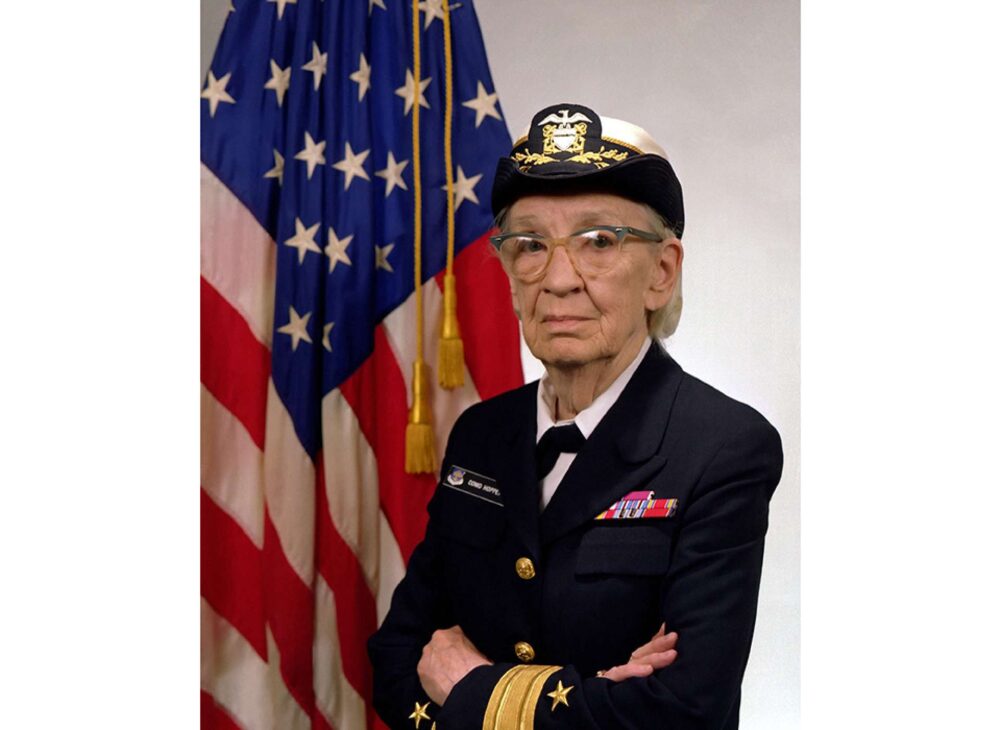
Admiral Grace Murray Hopper – the oldest active-duty commissioned officer in the U.S. armed forces when she retired in 1986 at age 79
The Idea That Changed Programming Forever
At the time, computers could only understand machine code, long sequences of numbers that were difficult and time-consuming to write. Hopper come up with something revolutionary: programming languages that used words instead of pure numbers.
In the early 1950s, she developed one of the first compilers (starting with her A-0 system in 1952, which evolved into FLOW-MATIC), a program that translates human-readable instructions into machine code. This innovation allowed programmers to write instructions using more understandable commands.
Her work later contributed to the creation of COBOL, one of the first widely used programming languages designed for business and government systems. Hopper played a key role in its standardisation through the CODASYL committee in the late 1950s. COBOL became the backbone of financial institutions, government databases, and large-scale data systems around the world, and many legacy systems still rely on it today.
The Famous “Computer Bug”
Grace Hopper is often associated with the origin of the term “computer bug.” On September 9, 1947, while working with the Harvard Mark II, her team discovered that a malfunction was caused by an actual moth trapped in a relay. They taped the insect into the logbook and noted: “First actual case of bug being found.” Hopper was part of the team and later popularized the story in her lectures, helping make “debugging” a standard term in programming. (While “bug” for technical issues predated this, the real insect incident gave it legendary status.)
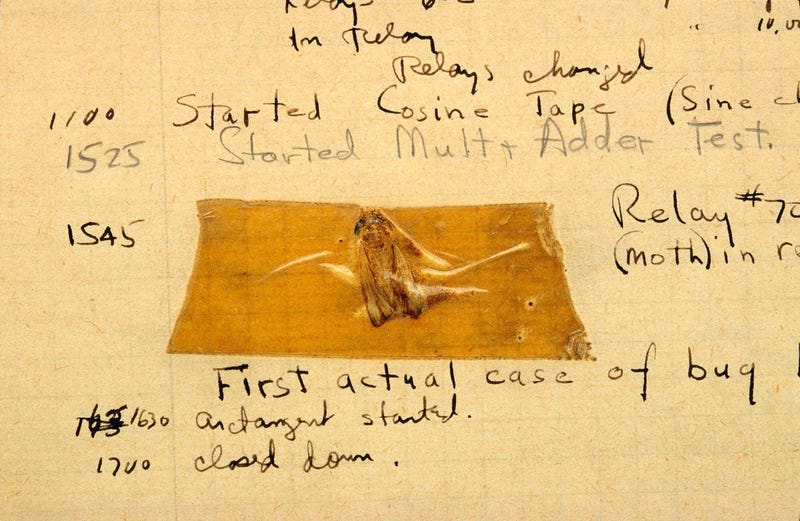
The first ever computer bug founded by Grace Hopper Bug
Technology That Powers Everyday Life
Hopper’s work helped create the foundation for modern software development. Without programming languages, the digital tools families depend on today would be far more difficult to build. Her influence can be seen in technologies that shape everyday life:
- Online banking and financial systems
- Government and healthcare databases
- Business software and logistics systems
- The programming languages that power apps and websites
Recognition and a Lasting Legacy
Grace Hopper eventually rose to the rank of Rear Admiral in the United States Navy, the oldest active-duty commissioned officer in the U.S. armed forces when she retired in 1986 at age 79. She was buried with full military honors at Arlington National Cemetery after her death on January 1, 1992, at age 85.
After retiring from the Navy, she joined Digital Equipment Corporation (DEC) as a senior consultant, continuing to advocate for computing innovation until shortly before her passing.
In 2016, President Barack Obama posthumously awarded her the Presidential Medal of Freedom, one of the nation’s highest civilian honors, recognising her trailblazing contributions.
She spent much of her later career encouraging young people, especially women to pursue careers in technology and engineering. Today, one of the world’s largest celebrations of women in computing, the Grace Hopper Celebration of Women in Computing, is named in her honor and continues to inspire thousands annually.
Why Her Story Matters
Grace Hopper’s story reminds us that innovation often begins with a simple but powerful idea: technology should work for people, not the other way around. Her vision made programming more accessible, opening doors for generations of engineers and developers who would go on to build the digital world we know today.
Just like Hedy Lamarr helped shape wireless communication, Grace Hopper helped teach computers how to understand us. And every time we use software, run an app, or write a line of code, we are building on the legacy of the woman who helped make it all possible.