Raising Wise Children in a World That Is Not Always Peaceful
By now, most of us have accepted a difficult truth: our children are growing up in a world where new conflicts seem to erupt every few years. One decade it is the war in Iraq, another it is Syria, and today they hear daily updates about Ukraine, the USA, Israel, or Iran. Names like Vladimir Putin or Ali Khamenei are no longer just chapters in history books, they are part of our family dinner conversations.
And here is the parenting reality: if we are not leading those conversations, social media will.
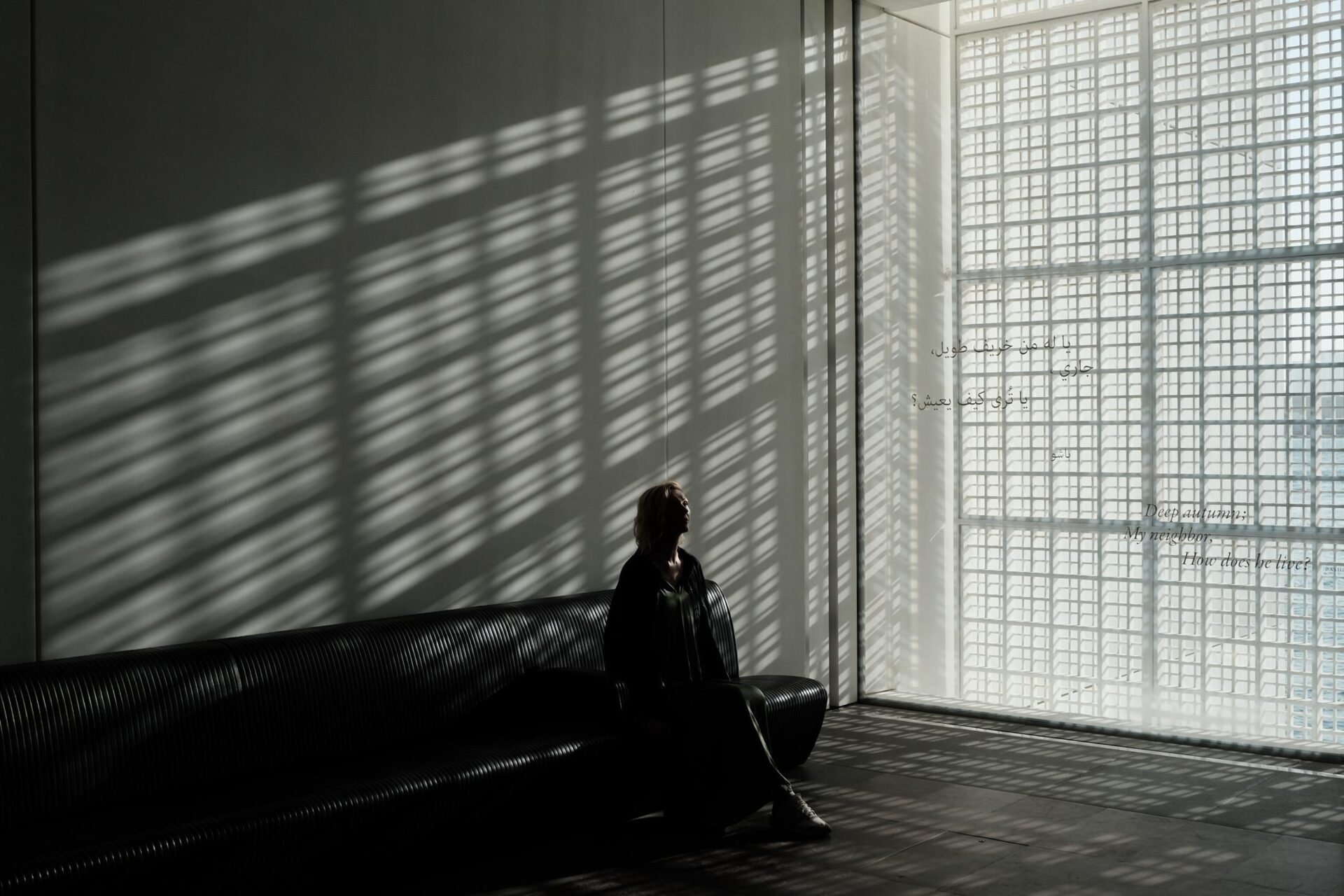
A Personal Moment: Abu Dhabi, One Week Before the Conflict
Just a week ago, before the conflict in the Middle East started, we were on holiday in Abu Dhabi with our 18-year-old daughter. She is studying medicine. She will soon be allowed to enter an operating room. She lives alone and holds real responsibility in her hands.
And yet, at our resort, she was not allowed to stay at the adults-only pool because in the United Arab Emirates the legal definition of full adulthood in certain contexts is 21, not 18. Under that age, young people cannot enter areas where alcohol is served.
She was confused. “How is that logical? I can soon assist in surgery, but I can’t sit by a pool?”
And there it was, a collision between systems. Between cultures. Between worlds.
But instead of shutting the discussion down by saying it’s simply the law of the country, we discussed it. We spoke about different legal systems. The fact that rights are not universal; they are shaped by culture, religion, politics, and history.
We debated how reasonable and how respectful the rules are, but most importantly, we spoke about the privilege we have: the privilege to discuss and disagree, the privilege of being born into a society where you can argue with your parents about rights at the dinner table without fear of being punished. And that this privilege is not accessible to everyone, just like freedom or human rights are not accessible to everyone.
Uninformed Parents Cannot Raise Informed Children
Parenting today requires more than providing comfort, good schools, and protein-enriched snacks. It requires intellectual responsibility, guys.
We cannot guide our children through misinformation if we ourselves scroll headlines without getting into context. We cannot criticise propaganda if we do not understand how propaganda has worked historically: from the world wars of the 20th century to the Cold War narratives that shaped entire generations, and now widely used on social media.
History is not about memorising dates as we were taught, we can Google them in seconds, but it’s about understanding and recognising socio-political contexts. When we help our children understand that history repeats itself in patterns, they stop being surprised by new conflicts and begin to look at today’s headlines with more curiosity and less panic.
Selective Exposure Is Not Protection
Some parents believe that if they avoid the “ugly topics of the war,” their children will remain calm and safe. They avoid difficult conversations about war, extremism, and injustice. They believe that selective exposure equals emotional safety.
But then the same children sit on the sofa watching Stranger Things or darker, more violent TV shows. Their brains consume even more detailed fear, violence, and power struggles, just in fictional packaging. Neuroscience shows us that the brain reacts in the exact same way to imagined threats as to real ones. It does not clearly separate “fictional violence” from “real conflict.” So while we shield them from the news, they absorb chaos through entertainment.
The difference? There is no purpose in entertainment, it’s just suffering for the sake of suffering.
When we choose not to discuss real, ugly events, we do not protect them from negativity. We distance them from the world’s context and promote selective and quite often selfish thinking.
The Comfortable Generation and the Ideological Trends
Many of our teenagers grow up in stable homes, with full fridges, freedom of speech, and educational opportunities. When your basic needs are never challenged, it only makes sense to seek higher approval and advocate for absolute freedom and absolute peace “no matter what.” And of course, peace is beautiful. Freedom is precious. But ideologies formed without global historical context are very fragile.
If taking a phone away for a day to our teens feels like a violation of “human rights”, it tells us something about their perspective on human rights, doesn’t it? But when our children question their rights like that, don’t shut them down, use it as a chance to ask questions:
What does freedom mean in different parts of the world?
What happens to people who criticize their governments in authoritarian states?
How do young people in different cultures protect their freedom?
Discuss how life might look under other systems, like in Iran, where laws about clothing and social behaviour are not matters of personal preference but state regulation, with real and often inhumane consequences if disobeyed.
These discussions are needed not to frighten them. Not to mock. But to build perspective and pull them a tiny bit higher above their comfort zone.
Teach Them to Think and Challenge Ideas
Young people’s brains are wired to seek approval. Exclusion for them feels like physical pain. So when a certain political or ideological position becomes trendy, going against it feels dangerous. On top of that, adolescents are also wired to think in absolutes. Neurologically, the prefrontal cortex, responsible for long-term consequence analysis, is still developing well into their twenties. At that stage, the world for them feels binary: fair/unfair, oppressed/oppressor, right/wrong.
When survival is not their main focus, attention shifts toward meaning, fairness, and global justice. Stability allows idealism to flourish. And the good thing here is that societies need both: their young moral idealism and our mature structural thinking. Because without idealism, systems stagnate; without realism, systems collapse.
So it is up to us not only to promote their critical thinking about events but also to help them develop the self-esteem to speak up in a respectful way, without believing that belonging should come with intellectual surrender, regardless of the relationship or topic. Instead of sitting quietly with a valid argument or arguing aggressively, encourage them to say: “I agree with this part, but I’m still learning about the rest.”
In order for them to challenge their group to think wider, we should not react to their idealistic beliefs with ridicule. Instead, we should approach them with curiosity: “Tell me why you think that.”
Instead of dismissing their beliefs, we can:
- Ask them to find three reliable sources with different perspectives.
- Compare how the same event is reported in different countries.
- Identify emotional language versus factual statements.
- Discuss who benefits from a specific narrative.
Turn social media into a research laboratory, not just a stage for makeup tutorials. Invite them to follow historians, economists, and journalists, not only beauty influencers.
Our role is not to win arguments (it should never be our goal in parenting). It is to model balanced thinking by saying:
“I support peace too. And sometimes history shows that peace requires difficult decisions.”
“I believe in equality. Let’s see how equality functions in different political systems.”
If we encourage our children to keep believing in ideologies while giving them perspective on global complexity, we as a society will grow stronger.
After Showing Them the Harsh World, How Do We Keep Positivity Alive?
This is the most delicate part. We must show them reality without planting fear in them or making them cynical. History is full not only of dictators and wars, but also of reformers, peacemakers, educators, scientists, and ordinary citizens who made life better. The world has swallowed and spat out tyrants before. It will do it again.
Our task is not to raise children who are afraid of leaders like Putin or Gaddafi. Our task is to raise children who are wiser and ethically stronger than them. Start today with teaching them:
- To judge systems, not skin color.
- To criticize ideas, not religions.
- To separate religion from extremism and ideologies from fanaticism.
In just a few decades, our children will run our companies, schools, and countries. They will inherit a complex world. We cannot prepare them by pretending complexity does not exist. The only way to help them see the whole picture is by:
- Educating ourselves.
- Discussing openly with them.
- Encouraging critical thinking.
- Allowing disagreement.
- Debating respectfully and not punishing them for their beliefs.
- Teaching historical awareness.
Despite the global “good vibes only” trends, our goal is to raise thinking adults, adults who can hold peace in one hand and realism in the other. Adults who can challenge propaganda with knowledge and facts. Adults who can belong to a group without losing their individuality. Adults who will build high functioning systems on idealism that is mixed with structural implementation, and not on fake news, fear, and ego.
The world will continue to face uncertainty. But if we do our work well, the next generation will not be fragile in front of it. They will be ready.