The Greatest Women in History: Emilija Pliateryte, The Woman Who Refused to Know Her Place
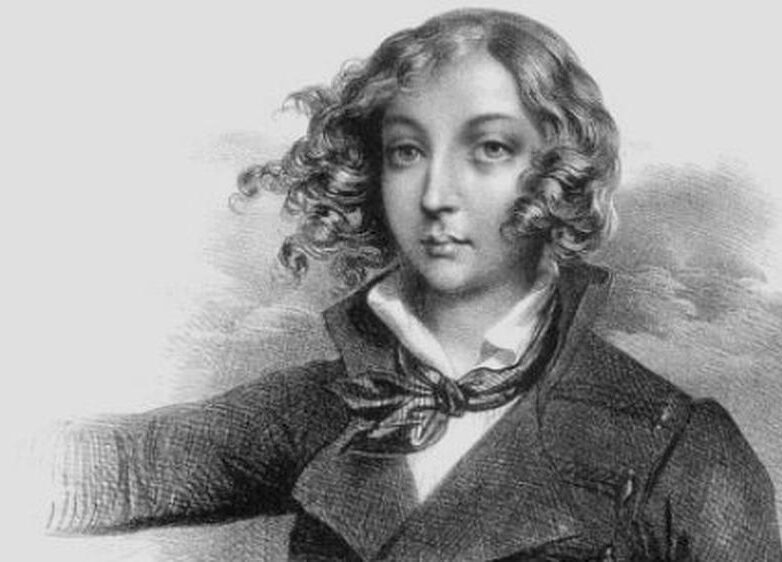
Imagine being a 24-year-old woman in 1831. You come from an aristocratic family, have a comfortable life, and society has clear expectations about your future: find a respectable husband, have children, manage your household, and preferably avoid having too many opinions about politics.
Now imagine deciding that none of this sounds like you, so you cut off your long hair, put on a military uniform, and going to war against one of Europe’s most powerful empires. That’s pretty much what Emilija Pliateryte did.
Born in Vilnius in 1806, Emilija Pliateryte (internationally known as Emilia Plater) became one of the most remarkable women of the 1830–1831 fighting against the Russian Empire. She organised ammunition, joined military campaigns, and eventually received the rank of captain.
She died at just 25.
As a Lithuanian woman, I feel important introducing and writing about Emilija Pliateryte. Not only because she fought for the freedom of the country where I am from, but because nearly 200 years later, many of the social expectations she challenged are still relevant. We still debate whether women are strong enough to lead, emotional enough to be leaders, ambitious enough to be threatening, or attractive enough to represent an organisation.
What would happen if Emilija Pliateryte were alive today? Would we celebrate her courage, or would we first challenge whether she was sufficiently qualified, likeable and appropriately dressed?
There are five very interesting things about her actual life worth discussing.
1. She Was Born Privileged, but She Didn’t Choose a Privileged Life
Emilija Pliateryte was born on 13 November 1806 into the aristocratic Plater family in Vilnius. At the time, Lithuania was under Russian imperial rule, following the partitions of the Polish–Lithuanian Commonwealth at the end of the eighteenth century. Her family’s position offered her opportunities that most women could not even think to dream of. She received a private education, learned to draw, sing and write poetry, and developed interests in history, riding and shooting.
Her parents separated when she was nine, she grew up with her mother among relatives. Her mother died in 1830, and according to the Polish Biographical Dictionary, her father later refused to see her.
Today, when discussing successful women, we often swing between two extremes. We either admire the woman who built everything from nothing or dismiss the woman who came from money, assuming her achievements were somehow inevitable.
Emilija doesn’t fit into either category. She had privileges, but she also lived in a world where her gender determined which opportunities were considered appropriate for her.
If she lived today, perhaps she’d be that young woman from a wealthy family who decides against joining the family business or marrying someone politically convenient and instead becomes involved in an opposition movement. And I can already imagine the comments: “She’s only doing this because Daddy has money.” “She has no idea how ordinary people live.”
2. She Was Inspired by Other Women Long Before Female Solidarity Became a Hashtag
One of my favourite details about Emilija Pliateryte is that she had female role models. Not queens admired for their marriages or noblewomen celebrated for their beauty. She admired women who fought. Among her inspirations were Joan of Arc and Laskarina Bouboulina, the Greek naval commander who played an important role in the Greek War of Independence. The latter was reportedly so important to her that a portrait of Bouboulina decorated Emilija’s room. She was also influenced by Romantic literature, including the work of Adam Mickiewicz, whose female characters sometimes challenged conventional expectations of courage and patriotism.
Today, we understand that seeing someone similar to ourselves succeed can influence what we imagine possible. Psychologist Albert Bandura later developed social learning theory, describing how people can learn by observing others. Role models don’t guarantee that we will imitate somebody, but they can influence our behaviour.
3. She Didn’t Just Join a Rebellion. She Organised One.
In November 1830, an uprising against Russian rule began in Warsaw. By the spring of 1831, the rebellion had spread into Lithuania. Together with her cousin Cezaris Plateris, Emilija helped organise an armed group in the Dusetos area. Lithuanian historical records describe a force that included around 200 mounted riflemen, 60 cavalrymen and several hundred infantrymen, some armed with scythes and hunting guns. Her unit advanced towards Daugavpils, captured Zarasai for a time, and later joined other rebel formations.
Was she brave? Absolutely.
Was she militarily experienced? Not particularly.
Did she always make strategically sound decisions? We shouldn’t assume so.
The Polish Biographical Dictionary even questions some of the more dramatic military successes attributed to her, including the scale of her independent command. Her courage is well established, but parts of her battlefield legend are difficult to verify.
Nowadays, when discussing female leaders, especially young female leaders, there is pressure to be extraordinary before you even start. What made Emilija great was not her perfect military commanding, but how she inspired others to resist. She made choices. She took risks. That’s leadership, with all its uncomfortable imperfections.
4. She Was Told to Go Home, But She Didn’t.
One of the most revealing moments of Emilija’s military career came when she joined the forces of General Dezydery Chłapowski. According to the Polish Biographical Dictionary, the general politely advised her to return home. She refused. He eventually appointed her to command the first company of the 25th Infantry Regiment, although historians debate how much operational authority the position actually involved. She received the rank of captain.

Emilija Pliateryte Leading the Scythemen in 1831 — Based on a Painting by Jan Rosen (https://polskieradio24.pl/artykul/749121%2Cemilia-plater-chciala-byc-druga-joanna-darc?utm_source=chatgpt.com)
You can’t even imagine how much I would love to have been present during that conversation. Here was a woman who had already travelled with armed insurgents, participated in a dangerous rebellion and demonstrated that she was willing to risk her life. And somebody still thought the most appropriate solution was for her to go home.
Sounds very familiar, right? How many women today are still advised to choose something more suitable. This didn’t change much, we only have become more sophisticated in communicating these messages. Instead of saying that a woman doesn’t belong in politics, somebody might suggest she lacks the necessary temperament. Instead of questioning whether women should lead companies, a board might express concerns about whether a particular female candidate is technical enough.
Of course, sometimes these concerns are genuine. Not every criticism of a woman is sexism, and not every ambitious woman is automatically qualified.
But the historical comparison raises an important question: when someone tells a woman she isn’t ready, are they assessing her abilities, or measuring how comfortably she fits their idea of a leader?
Following the inclusivity trend some organisations like appointing woman to a prestigious position while carefully leaving the actual distribution of power elsewhere. A title is not necessarily authority. Visibility is not necessarily influence. Unfortunately we are still learning the difference.
5. She Became a Celebrity After Her Death, but Not Entirely on Her Own Terms
By July 1831, the uprising was collapsing in Lithuania. As rebel forces retreated towards Prussia, Emilija refused to abandon the struggle. Together with her companion Maria Raszanowiczówna and her cousin Cezaris, she attempted to reach the Polish Kingdom, where resistance continued. She became seriously ill during the journey and died on 23 December 1831, aged just 25. She was buried in Kapčiamiestis, Lithuania.
Her death, however, was only the beginning of her public fame. In 1832, Adam Mickiewicz published Śmierć pułkownika (The Death of a Colonel), a poem that helped transform her into a romantic national heroine. Her image spread across Europe. She appeared in poems, prints, books and theatrical productions. She became associated with the image of a beautiful, courageous young woman sacrificing her life for her homeland.
She spent her short life refusing to fit the conventional image of a woman. But after her death, society created a much more conventionally feminine image of her: the woman who had cut her hair, worn military clothing and challenged traditional expectations was transformed into an idealised, almost saintly figure.
And isn’t that a bit similar to what happens with public women today? We look up to strong, independent women (take Princess Diana as a good example), but we are also very interested in their clothes, makeup, relationships, we wish them to be sufficiently pleasant. Meanwhile, their actual political influence compete for space with the analysis of their appearance.
If Emilija Pliaterytė Had Instagram, What Would She Be Like?
I have a feeling Emilija Pliateryte would have a fairly complicated relationship with social media. Not because she lacked communication skills. But because she’d understood that there is a big difference between building a following and building a movement.
I imagine she would use Instagram to explain political events live, encourage young people to get involved and analise what was really going on beyond the polished speeches of some politicians.
I suspect she would have very little patience for people who share revolutionary quotes every morning but become very engaged when somebody needs real help.
Would She Be a Feminist Today?
Calling Emilija a feminist in the modern sense would be historically inaccurate. She lived before the organised women’s movements that later became popular across much of Europe. Her political goal was national liberation, not women’s suffrage or legal equality. We don’t have enough evidence to confidently assign her today’s feminist beliefs.
But she was certainly a woman who challenged the gender expectations of her time through her actions. When Emilija chose military participation, she challenged the assumption that political and military responsibility belonged exclusively to men.
When Emilija Pliateryte accepted a leadership position, she entered a sphere from which women were excluded. And when she refused to return home, she showed that a woman’s understanding of her own capabilities might be rather different from society’s understanding of them.
I would describe her as a historically significant example of female agency and resistance to prescribed gender roles. And I find that more meaningful than trying to claim she would belong to one particular feminist movement today.
We shouldn’t assume historical women would conveniently share all our contemporary values simply because we admire them. That’s another way of turning real women into characters we’ve written for ourselves.
The Part of Her Story I Find Most Relevant Today
There is one more thing about Emilija Pliateryte that I think deserves attention. We celebrate exceptional women by describing how extraordinary they were: The first woman to do this. The youngest woman to achieve that. The woman brave enough to enter a man’s world. But I wonder is there something to celebrate if almost 200 years later, we still celebrate women becoming the first to occupy positions that men have held for generations, and whether this excitement of “The first women of something” distracts us from understanding their achievements in the first place.
It’s wonderful when another woman breaks a barrier. But in my view the real achievement would be reaching a point where her gender is no longer the most remarkable thing about her appointment.
I don’t think Emilia’s story should teach us, women to be reckless, to sacrifice ourselves for a cause or to prove our strength by behaving like soldiers. But I strongly believe it should make us question who decides what a woman is capable of, and why we’re still so interested in getting someone’s permission.
Thank you for reading another story in The Greatest Women in History series. If you enjoyed it, you might also like my article about Madam C.J. Walker, the first female self-made millionaire.
Two very different women, born into very different circumstances. Both had to challenge what society considered an appropriate ambition for a woman.
And I suspect both would have quite a few things to say about the world we’re living in today.
Historical sources and further reading